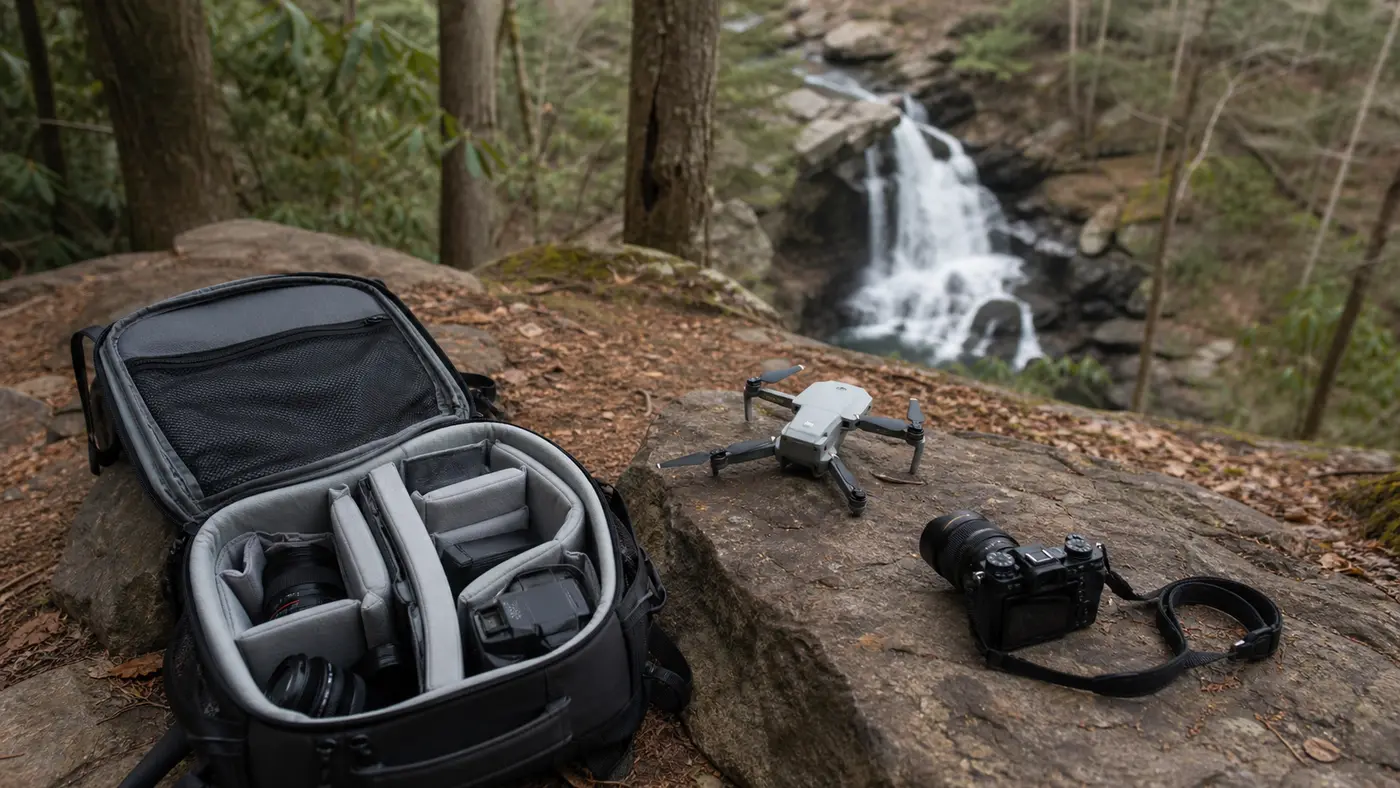
Some places need more than one kind of photograph. A trail can feel intimate from ground level, dramatic from above, and completely different when the focus shifts to a person, detail, or quiet moment inside the scene. That is why I like combining drone, trail, and camera photography when the location calls for it.
In Pennsylvania, that layered approach fits naturally. Waterfalls, wooded paths, small towns, overlooks, fields, old roads, and state parks all have more than one story happening at the same time. The job of the camera is to decide which layer matters most in the moment.
Ground photos tell the close story
Ground-level photography is where the details live. Wet rock, trail markers, tree roots, moving water, weathered buildings, quiet overlooks, and candid moments all help a place feel real. These are the images that make someone remember what it was like to stand there.
Posts like Ricketts Glen State Park and Eternal Flame Falls are built around that feeling. The trail is not just a route. It is part of the story. A good ground-level image can show texture, effort, weather, and scale from a human point of view.
Drone photos show scale and setting
Drone photography adds context. From above, a property, trail system, shoreline, field, or wooded area can suddenly make more sense. A drone image can show how a subject sits inside the surrounding landscape. That is useful for adventure storytelling, but it is also valuable for real estate, local businesses, venues, and outdoor projects.
The important thing is restraint. A drone photo should not be added just because it looks dramatic. It should answer a question: where is this, how is it shaped, what surrounds it, how big does it feel, or why does the location matter?
Camera choice depends on the final purpose
Different cameras serve different parts of the work. A simple DSLR-style camera can be perfect for slower trail photography where the goal is to stop, look, and compose carefully. A lightweight mirrorless camera can make sense for longer walks when keeping the kit small matters. A more serious camera body may be the better choice for portraits, landscapes, client images, or final files that need more editing flexibility.
The point is not to make gear the center of the story. The point is to choose the tool that helps the final image do its job.
How a layered photo story comes together
When I think through a location, I usually look for three categories of images:
- Establishing images: wide scenes that show where the story happens.
- Middle-distance images: frames that show the subject, trail, person, property, or feature clearly.
- Detail images: textures, signs, gear, water, stone, trees, hands, products, or other small clues that make the story feel grounded.
Drone photos can support the establishing layer. Ground-level camera work often carries the middle and detail layers. Together, they create a set of images that feels more complete than one angle alone.
How this translates to client work
The same approach works for people and businesses. A family session may need natural portraits, environmental details, and a few images that show the location. A branding session may need headshots, workspace images, tools, product details, and social media content. A real estate shoot may need ground-level exteriors plus drone coverage to show the property clearly.
That is where outdoor storytelling and client photography connect. The same habits that help on a trail, paying attention to light, layers, weather, access, and story, also help when planning practical images for a person, property, or business.
What I look for on location
Before I decide what to photograph, I look for the shape of the place. Where does the eye travel first? What details explain the location? Is there a clean wide view, or is the stronger image hidden in texture, water, leaves, stone, or a person moving through the frame?
That small scouting process helps decide whether the drone, the camera, or the details should lead. It also keeps the final image set from feeling random. Each frame should have a reason to exist.
FAQ: drone, trail, and camera photography
Does every outdoor post need drone photos?
No. Drone photos are useful when scale or context matters. If the strongest story is in the details, ground-level photos may be enough.
Why combine different kinds of images?
A complete visual story often needs more than one distance. Wide images show place, medium images show subject, and details make the story feel specific.
Can this approach work for businesses?
Yes. Small businesses, real estate listings, venues, and brand sessions can all benefit from a mix of exterior context, people-focused images, details, and practical marketing photos.
If you like the mix of outdoor storytelling, clean portraits, and drone-supported images, I offer photography services in Lansdale, PA within the surrounding region. I can help with portraits, families, branding, real estate, and custom photo projects.
The Falls Here Network
Explore more regional outdoor stories.
Regional outdoor stories, waterfalls, food stops, photography, and travel notes across PA, NJ, NY, DC, MD, VA, and Philadelphia.