For handheld waterfall photography, I start around 1/125 second when I want movement without losing all the texture in the water. I move toward 1/250 or 1/500 second when spray, bright light, or the force of the falls makes individual detail part of the story. I only move toward 1/40 second or slower when my footing, support, light, and the trail itself make that choice sensible.
There is no single best shutter speed for every waterfall. Water volume changes. Light moves across the gorge. Some overlooks are wide and comfortable; others are wet, narrow, crowded, or bounded for good reason. The setting has to serve the photograph without turning the camera into a distraction from the place.
What My Hawk Falls Sequence Shows
I photographed Hawk Falls at Hickory Run State Park on July 17, 2021. The midsummer light was bright and uneven, with reflective water below a canopy that shifted between open sun and deep green shade. I was using a Samsung phone handheld—no tripod and no neutral-density filter.
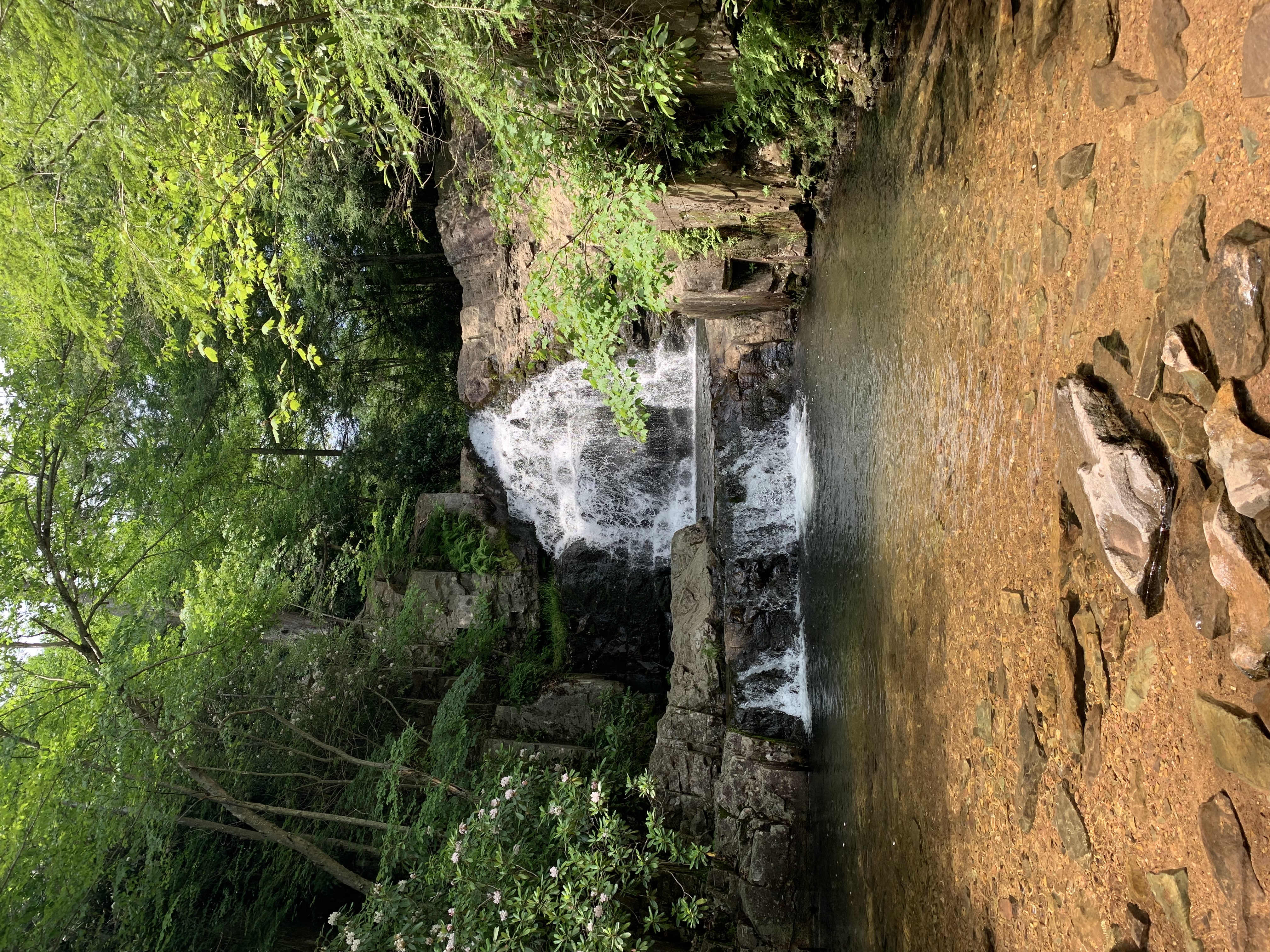
The archived sequence includes several frames made from substantially the same viewpoint with the same focal length, aperture, and ISO. At approximately 1/267 second, the upper fall breaks into many separate threads and bright flecks. The frame feels energetic. The water is moving, but it is not reduced to a smooth white ribbon.
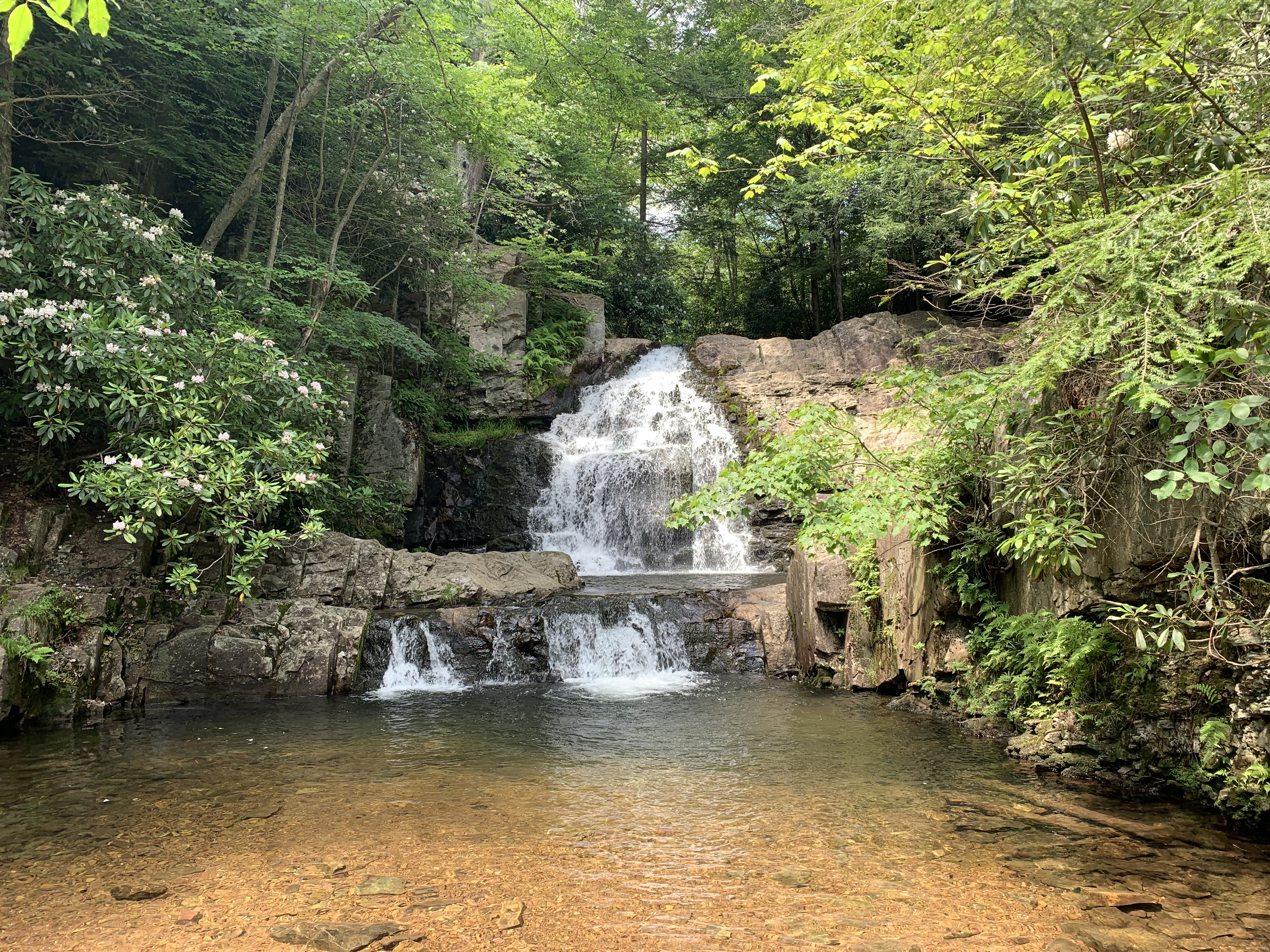
At approximately 1/132 second, the difference is real but modest. More of the water begins to connect through the drop, while the rock, foliage, and pool remain sharp enough for a handheld documentary frame. This is exactly why I like 1/125 second as a starting point: it gives me room to see what the water is doing before I decide whether the photograph needs more texture or more flow.
This was not a laboratory test. The phone controlled parts of the exposure, and my framing shifted slightly. I would not use these files to claim that 1/132 second is universally better than 1/267. They show something more useful: a small shutter-speed change can alter the feel of the water even when the scene remains recognizable.
What 1/500 Second Did at Watkins Glen
A month earlier, on June 24, 2021, I carried a Canon Rebel T7 through Watkins Glen State Park. The gorge created a harder exposure problem than Hawk Falls. Bright water and sunlit rock sat beside shadows that went almost black. At 1/500 second, the camera stopped the water aggressively and protected much of its surface texture.
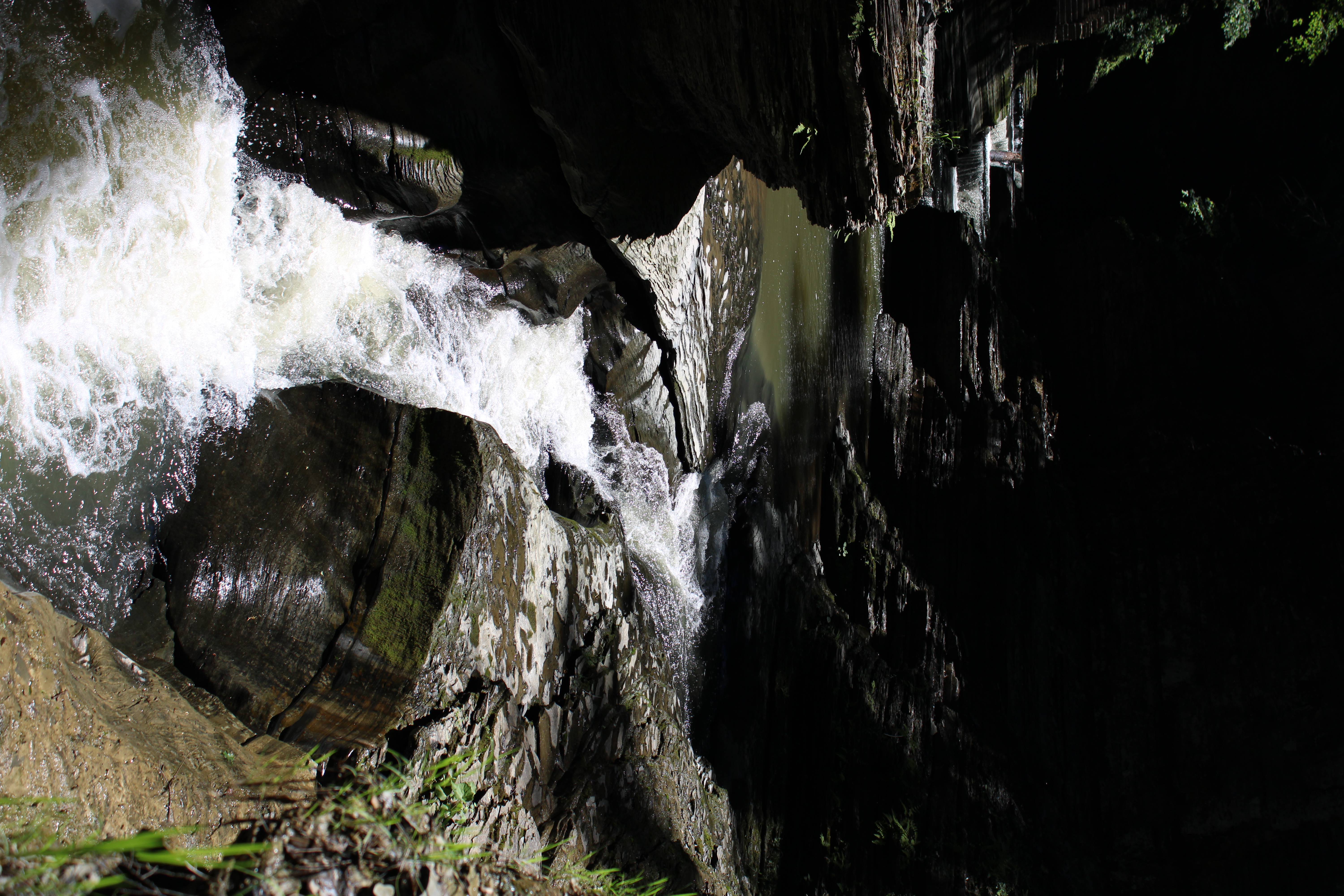
The water has edges, bubbles, and direction. That suits a scene where force and rock texture matter. The frame also exposes the limitation of treating shutter speed as the only decision: the gorge shadows are heavy, the bright water is demanding, and no single setting makes that contrast disappear.
What Changed Near 1/40 Second
Another Watkins Glen frame was made at 1/40 second. It is not a matched composition, so I do not present it as a clean before-and-after test. It is still useful evidence. The smaller cascades begin to soften, but the slower exposure also makes camera stability, subject movement, bright highlights, and crowded composition harder to ignore.
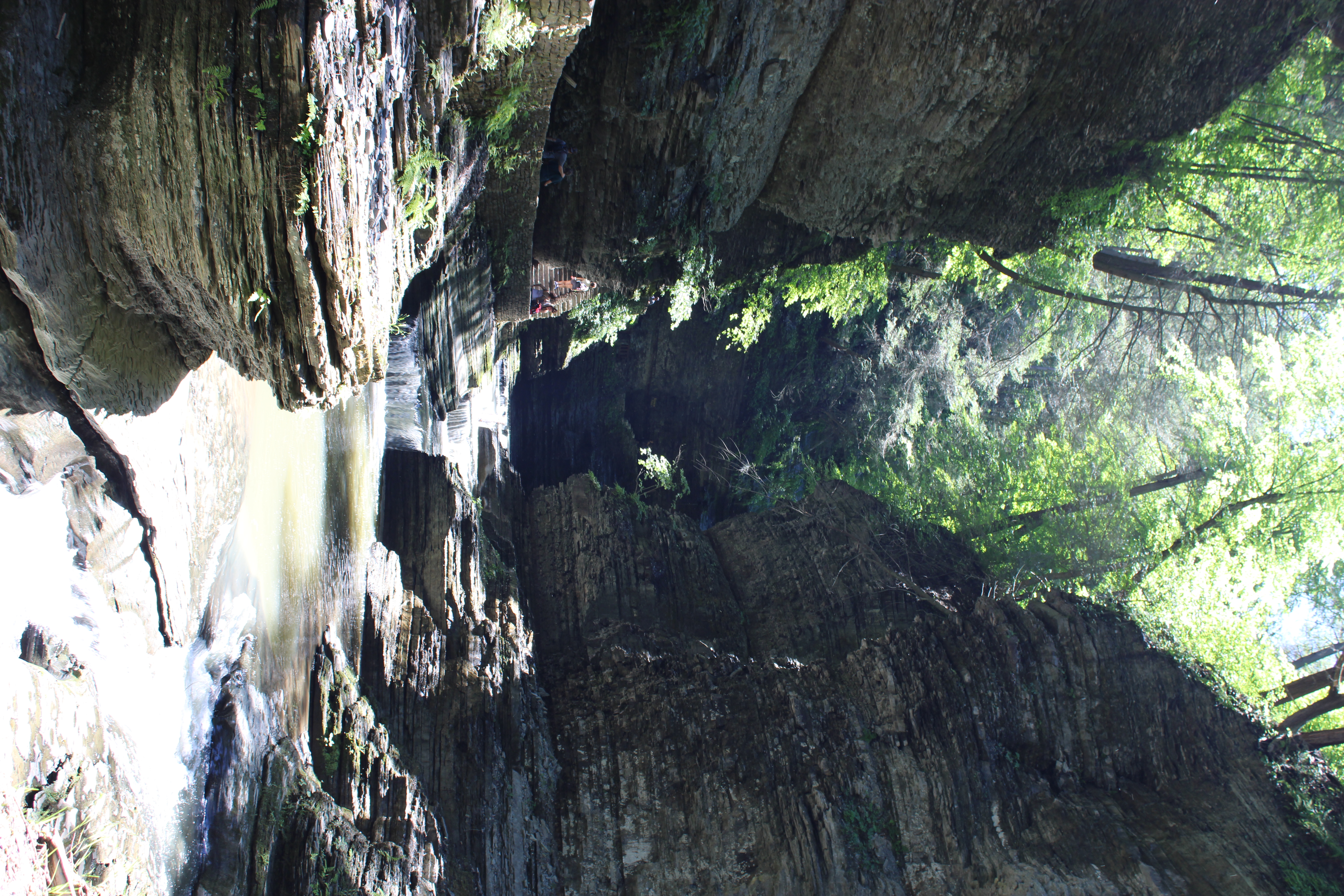
I consider this a useful failure rather than a portfolio frame. The bright foreground water pulls hard against the shaded gorge, visitors become small visual interruptions, and the slower shutter does not fix the light. It reminds me to decide what the photograph is about before chasing a number on the camera.
A Practical Waterfall Shutter-Speed Range
- 1/500 second and faster: useful when I want to freeze spray, preserve individual water texture, or work handheld in bright light.
- About 1/250 to 1/125 second: my practical handheld starting range for visible motion with recognizable texture.
- About 1/60 to 1/30 second: enough to soften some flow, but stability and exposure mistakes become easier to see.
- Slower than 1/30 second: a deliberate-support decision, not a setting I claim to have tested in this archived field set.
These are starting ranges, not rules. A thin cascade can look smooth sooner than a heavy fall. A close detail can exaggerate motion that barely registers in a wide landscape. Shade may allow a slower exposure naturally, while midday light can force a lower ISO, smaller aperture, or filter before the shutter can stay open safely.
Tripods, Filters, and Honest Limits
A tripod can make slower exposures repeatable when there is a stable, permitted place to set one without blocking the trail. A neutral-density filter can reduce the light reaching the sensor when a slow shutter is the goal. I did not document either tool in these Hawk Falls or Watkins Glen sets, so I will not pretend these photographs prove a tripod or filter workflow.
What I can say from the files is simpler. Handheld work became less forgiving near 1/40 second. Fast settings preserved texture but did not solve contrast. The matched Hawk Falls sequence gave me a dependable middle ground near 1/125 second. A future controlled test should keep the camera position, focal length, aperture, ISO, focus, and composition fixed while changing only shutter speed.
The Trail Sets the Boundary
Current Pennsylvania DCNR guidance describes Hawk Falls Trail as a 0.6-mile, more-difficult hiking trail and states plainly that swimming is prohibited at Hawk Falls. My archived visit note also records active enforcement near the water that day. The lesson I carry forward is not about arguing over a cleaner angle. It is that the posted boundary is part of the photographic condition.
DCNR advises hikers to carry water and a map, wear appropriate footwear, check the forecast and time of day, and keep a backup plan. New York State Parks notes that the Watkins Glen Gorge Trail has many stone steps, passes through spray, and operates seasonally. Those details matter when deciding whether a tripod, extra lens, or long setup belongs on the day at all.
I stay on the permitted route, keep equipment out of narrow traffic, and let a safe viewpoint determine the composition. If the only way to reach a desired shutter-speed experiment is to enter prohibited water or create a hazard for another hiker, the experiment waits.
My Field Checklist
- Make one fast documentary frame before experimenting.
- Start around 1/125 second and review the water texture at full size.
- Move faster when spray and individual droplets are the story.
- Move slower only when the camera and my footing are stable.
- Check the brightest water for clipped highlights.
- Wipe spray from the lens before judging sharpness.
- Keep the comparison controlled when I want to teach from it later.
- Let trail rules, weather, and other visitors end the experiment when necessary.
Sources & Field Notes
- Hawk Falls field sequence: July 17, 2021; Samsung SM-N986U; matched frames from approximately 1/267 to 1/132 second.
- Watkins Glen field sequence: June 24, 2021; Canon EOS Rebel T7; supporting frames from 1/500 to 1/30 second.
- Pennsylvania DCNR: Hickory Run hiking and Hawk Falls Trail.
- Pennsylvania DCNR: Hickory Run State Park.
- New York State Parks: Watkins Glen State Park.
- Leave No Trace principles.
For the packing side of the outing, read my waterfall hiking camera-kit guide. You can also explore my Ricketts Glen photography notes, Eternal Flame Falls field guide, or photography work.